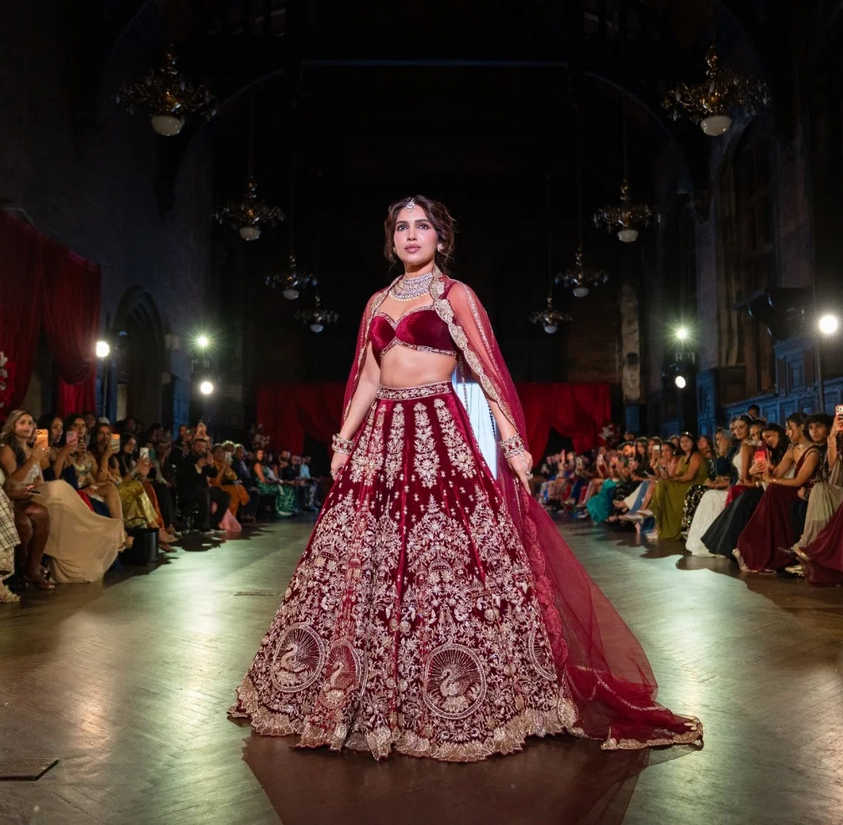
Ralph Lauren’s deep-pink gown from its Spring 2027 collection drew criticism after the brand described its close-up embroidery only as “hand-applied embellishments”. The post appeared on September 12, following the September 9 New York debut. Designer Prakhar Rao Singh Chandel and commenters said the metallic, raised work resembled zardozi, while caution remains about naming an exact technique from photographs.

Zardozi is a labour-intensive form of embroidery using metallic threads, beads, sequins and wires. It originated in Persia and later gained prominence in India during the Mughal period, developing into regional traditions including Lucknow’s. Mint reports that Lucknow and six surrounding districts received GI registration for zardozi in 2013, with an estimated 175,000 artisans in the cluster. That context makes “embellishments” sound less like a neutral description and more like a missed opportunity to name a living craft.
Chandel’s criticism focused on that omission rather than claiming Ralph Lauren could not use Indian craft. He pointed to the brand’s own language about each garment carrying its “history and character” and asked whose history was being represented. The Indian Express spoke to design educator Yash Sahu, who said the visual construction is closer to Indian zardozi than generic embroidery, but could also include aari. Only examining the garment could settle the stitch identity.
That distinction matters for Indian readers. Zardozi’s Persian origins do not erase its Indian history, regional practice or artisan economy; nor does visual resemblance prove Ralph Lauren copied a specific Indian garment. What the public record does establish is narrower: the brand named the fabric and the effect, but not the craft being debated. As Times of India reported, the criticism was about credit, visibility and the people behind the technique—not a proven case of plagiarism.
Read more on Ralph Lauren Faces Backlash Over NYFW Gown
Ralph Lauren has not publicly identified the embroidery as zardozi or issued a response found in this recheck. The fairest conclusion is therefore not that the gown definitively uses zardozi, but that “hand-applied embellishments” leaves Indian craft history invisible when a more precise description was possible. Naming the technique would not settle every question, but it would begin with accuracy.